The Future of Refined Glycerine Supply Chains: Building Resilience in a Changing Market
Refined glycerine has become an important raw material across personal care, pharmaceuticals, food, chemicals and other manufacturing industries. As demand continues to span multiple sectors, refined glycerine supply chains must increasingly balance quality, availability, logistics and changing market conditions.
For B2B manufacturers, supply continuity is no longer only about finding the lowest price. Reliable sourcing, consistent specifications and effective risk management are becoming equally important.
What Is Driving Changes in Refined Glycerine Supply Chains?
Refined glycerine is produced by purifying glycerine obtained from natural fats and oils or as a co-product of biodiesel production. The availability of crude glycerine is therefore closely connected to upstream feedstock and biodiesel activity. Changes in these markets can influence supply volumes and pricing.
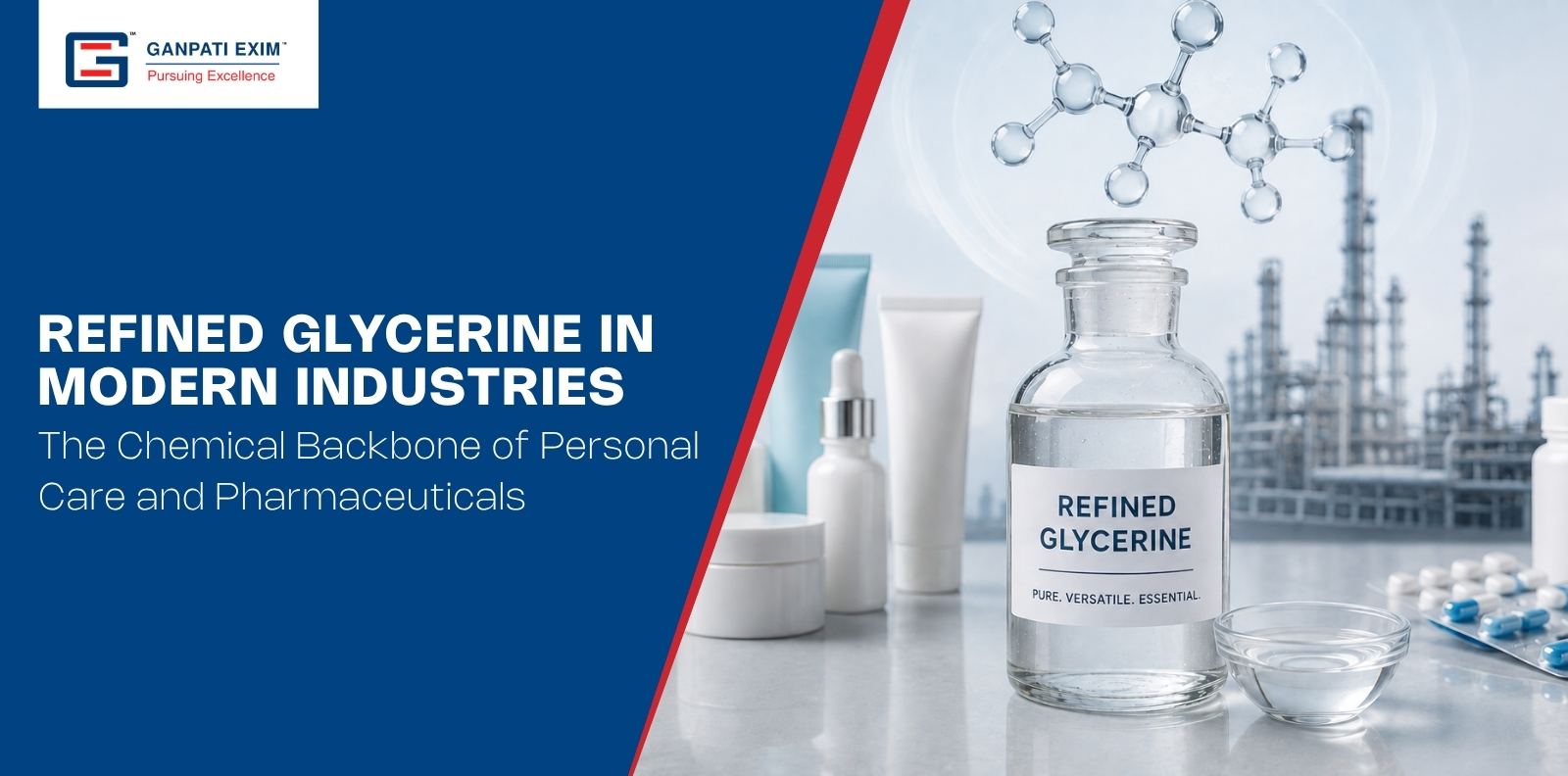
At the same time, refined glycerine serves diverse industries. It can function as a humectant, solvent, excipient and formulation aid, with applications ranging from cosmetics and pharmaceuticals to food and chemical manufacturing.
This combination of interconnected supply and broad downstream demand makes glycerine sourcing an important procurement consideration.
Key Strategies for a More Resilient Glycerine Supply Chain
1. Diversify Sourcing
Depending heavily on one supplier, origin or logistics route can expose manufacturers to disruptions. Working with established trading and sourcing partners can provide greater flexibility when availability changes.
2. Prioritise Consistent Quality
Refined glycerine is available in different grades and specifications. Buyers should evaluate purity, application suitability, technical documentation and batch-to-batch consistency before selecting a supplier. Ganpati Exim lists refined glycerine in grades including USP, BP and technical grades.
3. Strengthen Logistics Planning
Transportation delays, port congestion and changing freight conditions can affect delivery schedules. Businesses can reduce exposure through realistic lead-time planning, appropriate inventory levels and proactive shipment coordination.
4. Build Long-Term Supplier Relationships
A dependable supplier relationship can improve communication around availability, specifications, documentation and delivery requirements. For manufacturers using glycerine continuously, this can support better production planning than relying entirely on spot purchasing.
The Role of Reliable B2B Suppliers
The future of the refined glycerine supply chain will depend on more than production capacity. Procurement teams will increasingly look for suppliers capable of combining product quality, sourcing expertise, documentation and dependable delivery.
Ganpati Exim includes Refined Glycerine within its Oleo Chemicals portfolio, alongside Crude Glycerine, Oleic Acid, Lauric Acid, Stearic Acid and Glycerol Monostearate.
A resilient refined glycerine supply chain requires a proactive approach to sourcing, quality management, logistics and supplier relationships. For B2B manufacturers, partnering with an experienced refined glycerine supplier can help create greater supply visibility and support consistent production as market conditions evolve.
FAQs
What affects the refined glycerine supply chain?
Feedstock availability, biodiesel production, refining capacity, demand, transportation conditions and regional trade flows can all influence refined glycerine supply.
How can manufacturers reduce glycerine supply risks?
Manufacturers can diversify suppliers, establish appropriate inventory policies, verify quality specifications and develop long-term relationships with reliable sourcing partners.
What should buyers check when sourcing refined glycerine?
Buyers should evaluate the required grade, purity, application suitability, quality documentation, batch consistency, packaging and delivery capability.
What industries use refined glycerine?
Refined glycerine is used across personal care, pharmaceuticals, food and beverage, chemicals, tobacco and other industrial applications, depending on the grade and specification.
Why is supplier reliability important for refined glycerine?
Reliable supply helps manufacturers plan production more effectively while reducing the operational impact of unexpected shortages, quality inconsistencies or delivery delays.