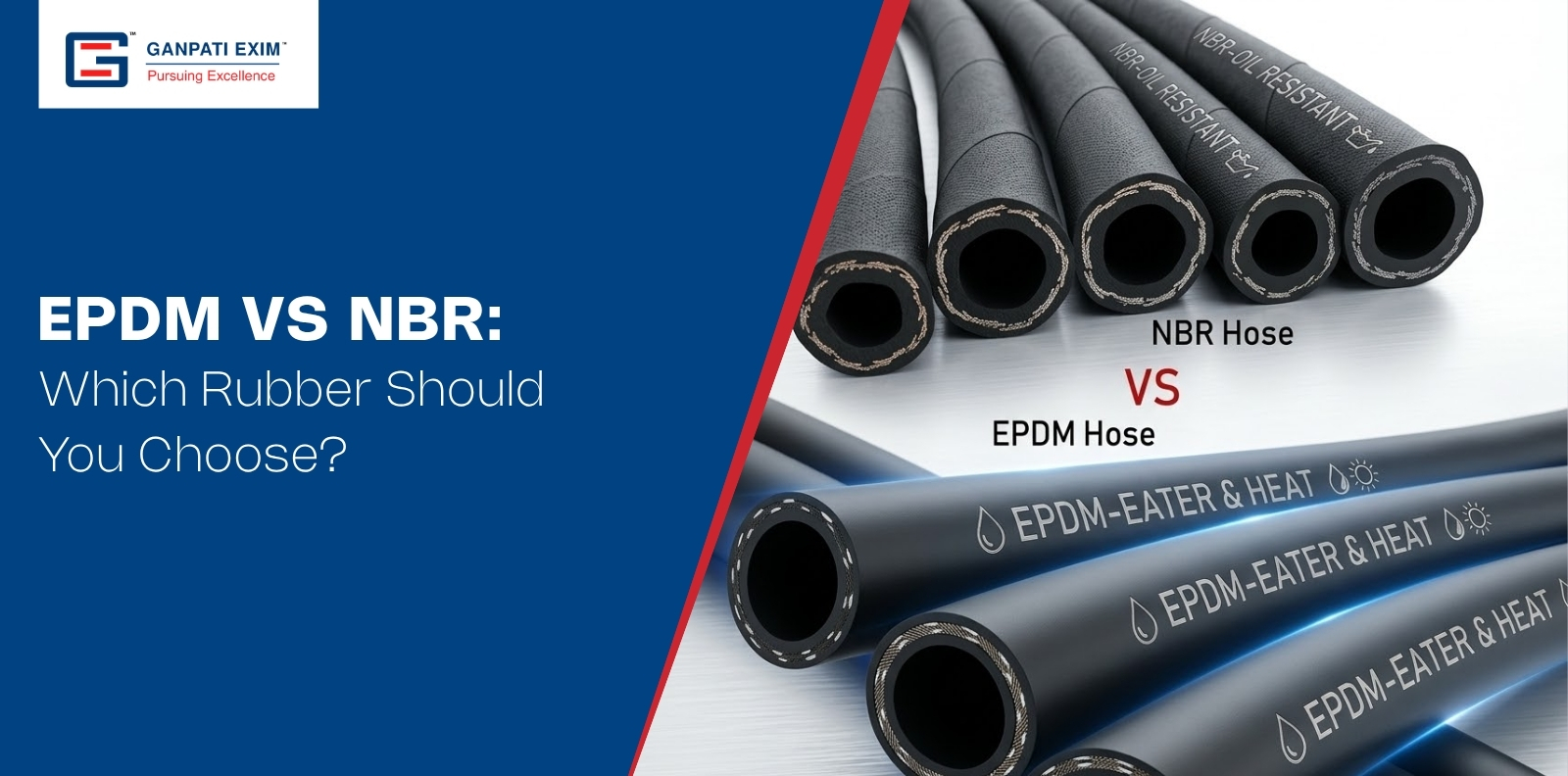
EPDM vs NBR: Which Rubber Should You Choose?
Choosing between EPDM and NBR rubber depends less on which material is “better” and more on where and how the rubber will be used.
Both are important synthetic rubbers, but they are designed to perform well under different conditions. NBR is generally preferred for oil and fuel exposure, while EPDM is better suited to water, ozone, UV and outdoor environments.
EPDM vs NBR: Key Differences
| Performance Requirement | EPDM | NBR |
| Mineral oil & petroleum fluids | Not recommended | Excellent |
| Oil & fuel resistance | Poor | Excellent |
| Water resistance | Excellent | Good |
| Ozone & UV resistance | Excellent | Limited |
| Weathering / outdoor exposure | Excellent | Limited |
| Steam / hot-water service | Generally preferred | Limited |
| Mechanical & abrasion performance | Good, grade dependent | Good to excellent, grade dependent |
The comparison is a general material-selection guide. Actual performance depends on the specific polymer grade, formulation, temperature, pressure, chemical concentration and service conditions.
When Should You Choose EPDM?
EPDM (Ethylene Propylene Diene Monomer) is the better starting point when resistance to water, ozone, UV radiation and weathering is important. It is widely used in automotive seals and weatherstripping, roofing, HVAC components, gaskets and other applications exposed to environmental conditions. Ganpati Exim also identifies EPDM for applications requiring weather resistance and durability.
However, EPDM is generally not suitable for petroleum oils, mineral oils and many hydrocarbon-based fluids. Selecting EPDM for an oil-service application can therefore result in swelling and loss of sealing performance.
When Should You Choose NBR?
NBR (Nitrile Butadiene Rubber) is generally the preferred option where oil, fuel, grease and petroleum-based fluid resistance is critical. It is commonly used for automotive and industrial seals, gaskets, hoses, O-rings and hydraulic applications.
Ganpati Exim describes NBR as offering excellent oil resistance along with good mechanical properties, resilience and abrasion resistance. The acrylonitrile content can also be varied to balance oil resistance and flexibility for different applications.
Its key limitation is lower resistance to ozone, UV radiation and prolonged outdoor weathering compared with EPDM.
EPDM or NBR: Which Is Better for Your Application?
A practical B2B selection rule is:
Choose EPDM for:
Water, outdoor exposure, ozone, UV, weathering and suitable hot-water or steam applications.
Choose NBR for:
Mineral oils, fuels, lubricants, greases and petroleum-based hydraulic fluids.
The most important question for engineers and procurement teams is therefore “What will the rubber come into contact with?” Fluid compatibility should be assessed before selecting the material.
Why Source EPDM and NBR from Ganpati Exim?
Ganpati Exim supplies both EPDM and NBR within its synthetic rubber portfolio, along with other materials such as SBR, PBR, IR, IIR, SSBR and chloroprene rubber. This allows buyers to source different synthetic rubber materials according to their specific application and performance requirements.
For B2B buyers, the objective should not be to select the “best” rubber in general, but to select the right grade for the required operating conditions.
Conclusion
EPDM and NBR are not direct substitutes. NBR is generally the better choice when oil and fuel resistance is the priority, while EPDM is generally better when water, ozone, UV and weather resistance are required.
The right selection ultimately depends on the application, operating environment and required performance. Ganpati Exim supplies both EPDM and NBR, supporting manufacturers and industrial buyers with synthetic rubber options for different application needs.
FAQs
1. Is EPDM better than NBR?
Neither material is universally better. EPDM is generally better for water, ozone and outdoor exposure, while NBR is better for oil, fuel and petroleum-based fluids.
2. Which rubber is better for oil: EPDM or NBR?
NBR is generally the preferred choice because it provides strong resistance to mineral oils, fuels and many petroleum-based fluids.
3. Which rubber is better for outdoor applications?
EPDM is generally preferred because of its excellent resistance to ozone, UV radiation and weathering.
4. Can EPDM and NBR be used interchangeably?
No. Their chemical-resistance profiles are different. EPDM is generally unsuitable for petroleum-based oils, while NBR is less suitable for prolonged ozone and outdoor exposure.
5. Does Ganpati Exim supply both EPDM and NBR?
Yes. Ganpati Exim lists both EPDM and NBR among its synthetic rubber products.
6. How do I choose between EPDM and NBR?
Start by identifying the fluid or chemicals involved, followed by temperature, pressure, weather exposure and required service life. The specific rubber grade should then be selected according to the application requirements.